Foundations
Will vs. Trust
A will generally directs certain matters through the estate process, while a trust can manage assets held in the trust. Both require careful planning.
Learn more →
Your resource library
A practical introduction to the documents, decisions, and conversations that belong in an estate-planning discussion.
Explore tools and educational resources designed to help you get organized, identify gaps, and move forward with greater clarity and confidence.
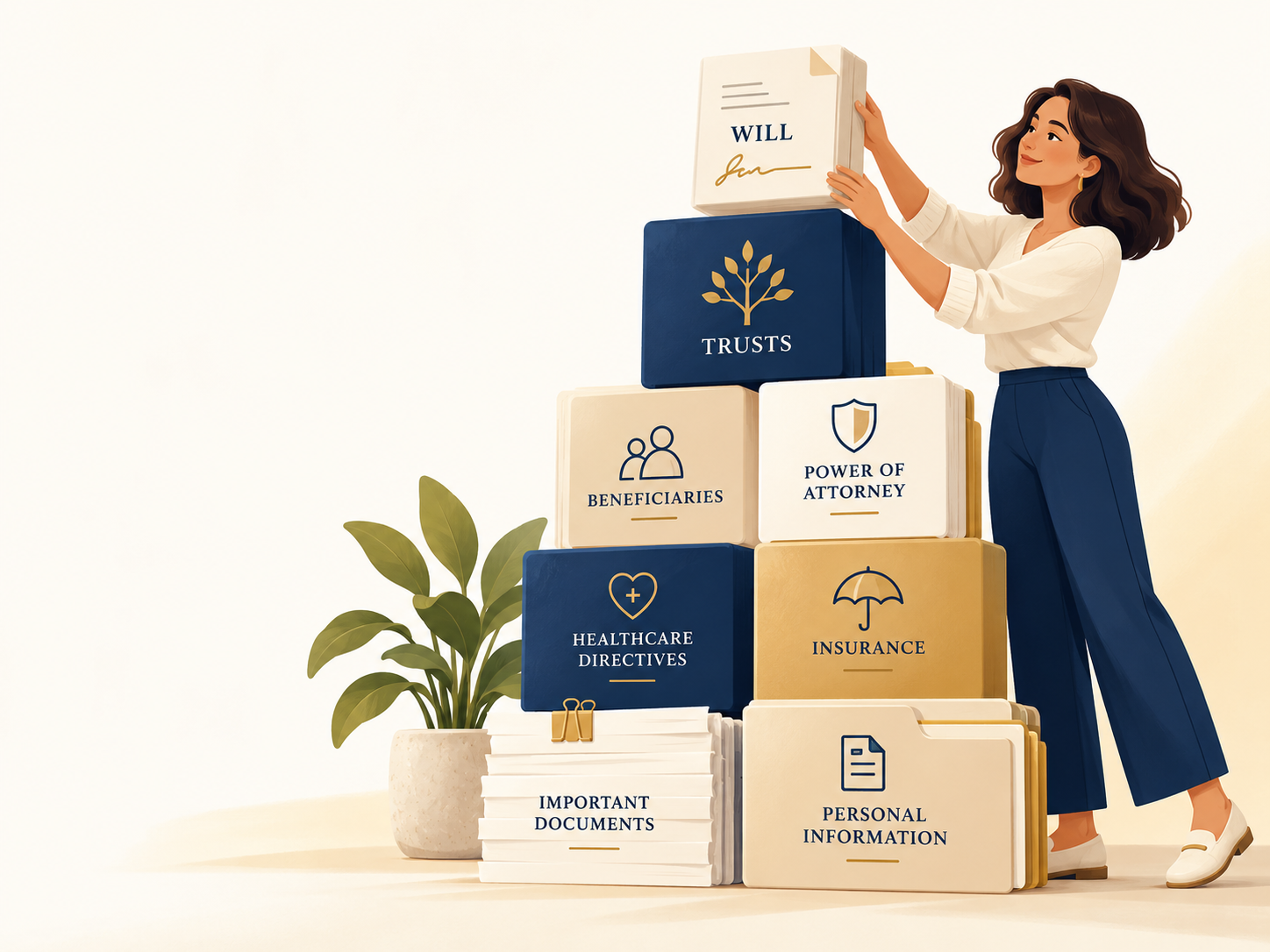
Start here
Use these guides to get familiar with key terms before meeting a qualified professional.
A will generally directs certain matters through the estate process, while a trust can manage assets held in the trust. Both require careful planning.
Learn more →Collect contact details, insurance information, account records, property documents, and planning paperwork.
View checklist →Understand why financial and healthcare decision-makers may be needed during your lifetime.
Read the FAQ →A personal preparation check-in
You may have thought about getting your house in order—but how much have you actually put in place? This short self-assessment is a starting point for recognizing where you are today and identifying areas that may need attention.
Answer 11 practical Yes or No questions covering wills, trusts, powers of attorney, healthcare wishes, beneficiary information, document access, final arrangements, guardianship, digital information, and family preparedness.
The purpose is not to pass or fail. Your responses can help you spot gaps, prioritize conversations with loved ones, and prepare more focused questions for an estate-planning professional.
Download Your Free Self-Assessment ↓Printable one-page PDF • Complete it at your own pace • No personal details need to be submitted online
Your preparation list
Consider creating a secure inventory of the essentials below. Store it safely and give access instructions only to appropriate trusted individuals.
Download Printable Checklist ↓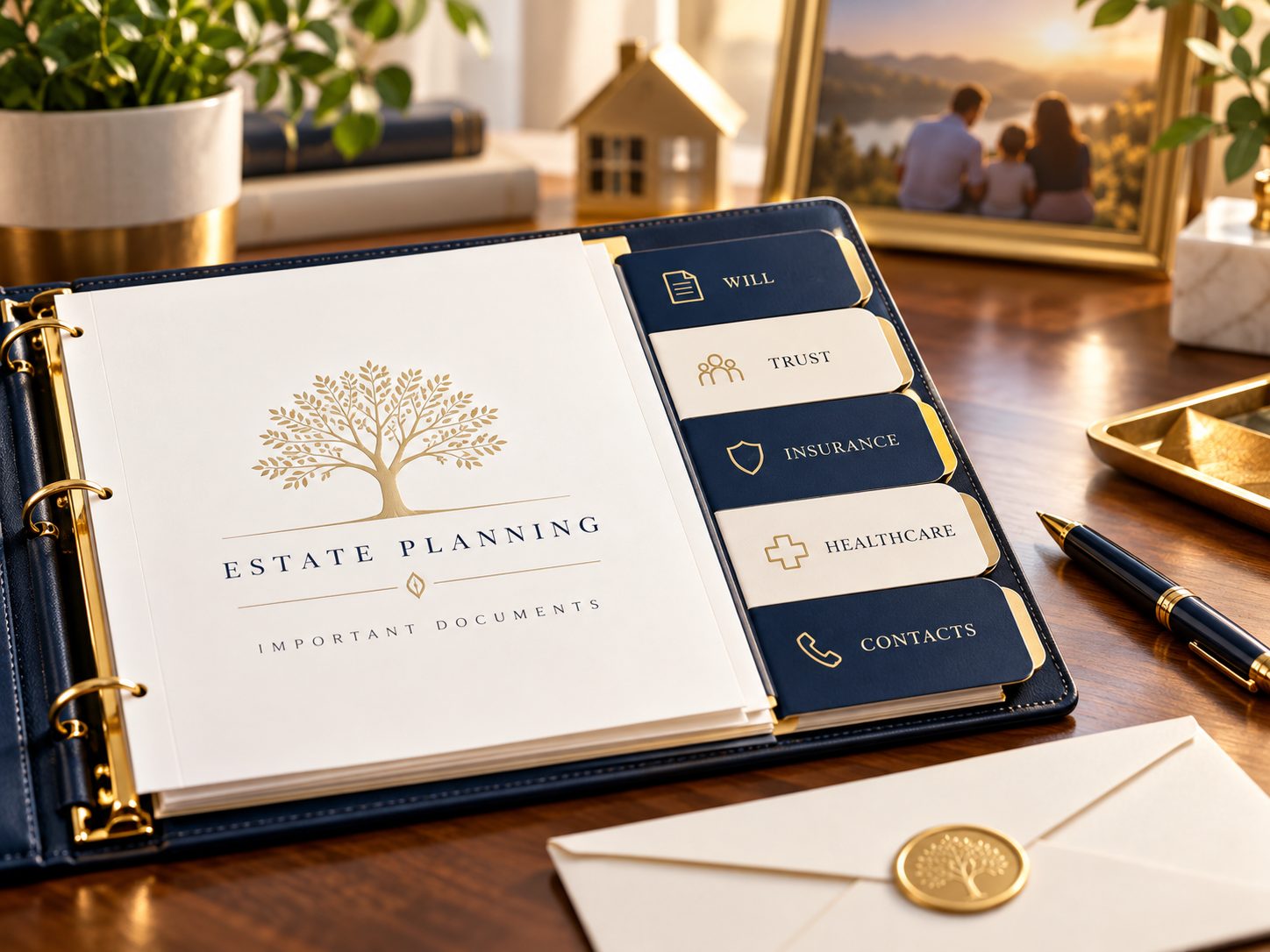
Do not put passwords or sensitive account numbers into an unsecured shared document.
Common questions
Many people benefit from thinking through healthcare choices, trusted decision-makers, beneficiary designations, and what should happen to personal belongings regardless of their net worth.
No. A will often provides instructions for the probate process rather than avoiding it. Rules vary by state and assets.
No. Trusts and wills serve different purposes. The right combination depends on personal goals, assets, beneficiaries, and applicable law.
It is a legal document that authorizes someone to act on your behalf within specified powers. The scope and requirements depend on state law and the document.
Yes. Account and policy beneficiary designations can have significant consequences and may operate outside your will. Periodically review them with appropriate providers and advisors.
Make a list of what you own, what you owe, who you trust, and your priorities. Then consider meeting with a qualified estate-planning attorney to develop documents suited to your circumstances.